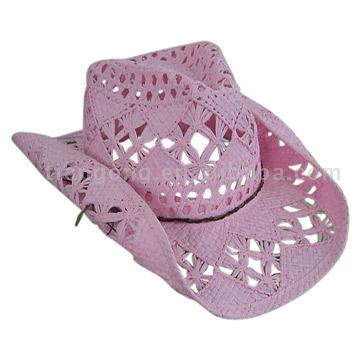
 Paper Cowboy Hat
 Cowboy Hat
 Cowboy Hat Large
 Bonjovi Cowboy Hat
 Strawcowboyhat Net Straw Cowboy Hat Kenny Chesney Sinature Cowboy Hat Palm Leaf Straw
 US Cowboy
 Cowboy Hat
 Paper Cowboy Hat
 Leather Cowboy Hat FS2 A3
"If it's the end of the world, what do you buy? Canned foods, guns and the generators," said Keith Springer, president of Capital Financial Advisory Services. "There are a huge number of people who feel this is the end of the world." _WSJInvestors seem to be investing for the coming doom-bama. Let's first look at the investments that are doing well. Then we will analyse the thinking behind the investing, and the wisdom of the thinking.
Amid the market tumult, a handful of stocks have seen their share prices ratchet up to record highs in recent weeks. And many of them are connected by a curious, if disconcerting, thread: Between them, they provide an investor with essentials for any respectable fallout shelter—makers of bottled water, canned goods, dehydrated broth, gas masks and auxiliary generators.So, 18 months under the Obama - Pelosi regime, and we are looking at the end of the world. You can't blame an investor for bidding up precious metals, guns, ammunition, and disaster preparedness supplies. Investing in "bunker portfolio investments" is fine as long as the monetary system is working. What if the system collapses when your portfolio is at its peak? How do you convert your stocks to useful tradegoods and survival supplies at that point?
A portfolio of the 18 companies that reached their peaks in the past month would be up about 24% this year, compared with the broader market's 4.5% decline, a sign some investors may be taking the prospects of financial Armageddon more seriously than one might think.
..."This is a very unusual economic cycle we're going through—we haven't been through anything like it in any of our lifetimes, and we don't know how it's going to play out," says Dorsey Farr, partner at Atlanta-based investment advisory French Wolf & Farr. "We don't see where this economy is going, and some of the potential outcomes are frightening."
... _WSJ
Humans, Smith argues, are the only moral creatures: they have innate moral worth and their well-being always takes precedence over the well-being of animals, who are amoral creatures. Humans do indeed have a moral obligation to promote animal welfare, but they are also entitled to use animals, particularly if the use of animals alleviates human suffering.What's the difference between humans and animals? Perhaps it the fact that we are even asking that question gives us the right to use the animal kingdom for our benefit. My next question is, in value, how many animals make one human?
 Luxury Party Dress
 Elegant Yellow Dress
 Georgewu Winter Clothing 2010
 Green Fashion Everlasting Hope Harem Pant
 Jettoman Fashion
 Spring Maxi Dress
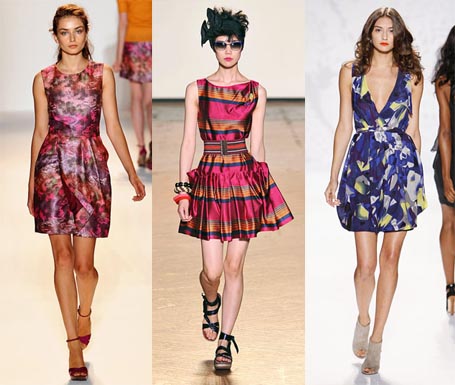 Garden Party Dress
 Heart Truth Celebrity Fashion Show Image
 Street Style
It's here that people with visual agnosias come in handy. Behrmann had previously studied people with integrative agnosia, who have difficulty recognising and naming complex objects as a whole, and instead seem to pay unusual attention to their individual features. One person, for example, mistook a picture of a harmonica for a computer keyboard, presumably thinking the row of air-holes in the mouthpiece were computer keys (Journal of Experimental Psychology: Human Perception and Performance, vol 29, p 19). Others have mistaken a picture of an octopus for a spider, and a pretzel for a snake.
In 2006, Behrmann put one of her patients, known as SM, through a series of experiments alongside people with normal vision. All were shown a set of three-dimensional objects on a screen, each made from two simple geometric shapes. Afterwards, the volunteers were shown a stream of these images, with a few new objects thrown in. Their task was to report whether or not they had seen the objects before.
While those with normal vision performed with nearly 100 per cent accuracy, SM made some intriguing mistakes. He knew he hadn't seen an object before if it contained a new part, but those that had the same parts in a different configuration confused him. About half the time he mistook these for the familiar objects (Journal of Experimental Psychology: Human Perception and Performance, vol 32, p 1169).
To Behrmann, the results suggest that our brains normally construct objects from a series of smaller building blocks, which she calls our "visual vocabulary". To recall our concept of an object, she says, we form a mental map of the way these parts fit together. It was at this stage that SM failed. "He had a good representation of the parts, but understood little of how they were combined," Behrmann says. _NewScientist
Brain scans have revealed that people with visual form agnosia tend to have damage to the ventral (lower) part of the brain's visual area. People with optic ataxia, on the other hand, have damage to the dorsal (upper) part. This led to the idea that we have two streams of visual processing. The ventral pathway is necessary for perceiving or recognising an object, while the dorsal pathway deals with an object's physical location in our visual field and, if we need to perform an action on it, guides the movement of our bodies. For this reason, scientists often refer to the two processes as the perception-action, or the what-where, streams of visual processing.
...In fact, the closer neuroscientists look, the more modular our visual systems appear. MRI scans of people with and without agnosias have suggested that within the ventral stream, separate aspects of appearance are processed independently. This year, psychologist Cristiana Cavina-Pratesi at Durham University in the UK found that shape, texture and colour are all processed in individual regions (Cerebral Cortex, DOI: 10.1093/cercor/bhp298).
Yet our experience feels markedly different. When we consciously see something, all these disparate elements are stitched seamlessly together, so we know instantly that an apple is smooth, green and round. The question of how we accomplish this is central to the study of conscious perception.
...So important is the role vision plays in most people's everyday lives that most research has concentrated on visual agnosias. Now the hunt is on for similar disorders that affect the other senses. Recently, for example, neurologists found a person who could understand speech but not other sounds. Coslett, meanwhile, is investigating whether simultanagnosics also have trouble binding other sensory sensations together, such as sights and sounds.
Now you see it...
There are many visual disorders, typically caused by damage to specific parts of the brain.
- Simultanagnosia - Seeing only one object at a time, even when viewing a scene comprising many items
- Integrative agnosia - Inability to recognise whole objects, tending to focus instead on individual features of an object
- Visual form agnosia - Inability to describe the shape, size or orientation of objects, yet exhibiting no problem in manipulating them
- Optic ataxia - Ability to report the shape and size of an object, though attempts to manipulate it are clumsy
- Prosopagnosia - Failure to recognise the faces of familiar people
- Pure alexia (aka agnosia for words) - Inability to identify individual characters or read text, even though subjects are sometimes able to write
- Agnosia for scenes - Inability to recognise known landmarks or scenes
- Colour agnosia - Ability to perceive colours without being able to identify, name or group them according to similarity
_NewScientistWe have discussed the binding problem before, but it is important to begin to zero in on the parts of the brain which are involved in binding different aspects of reality together into a "coherent whole."

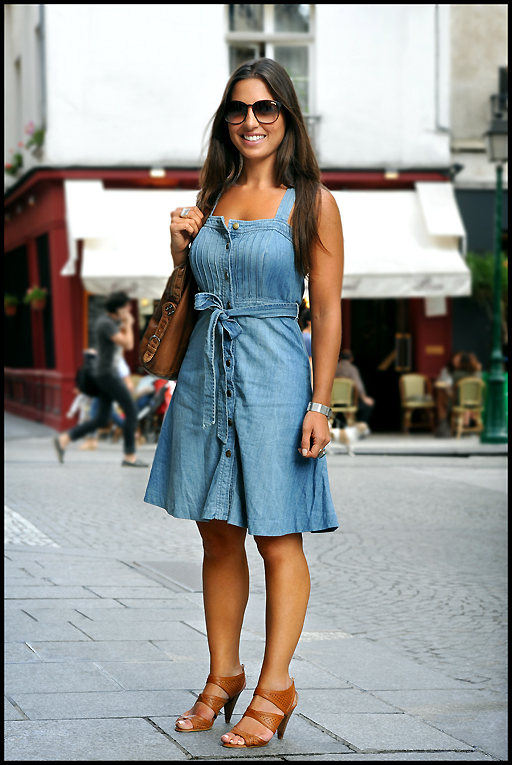
 Korea Style Beautiful Hat and Long Hair Styles in Winter
 Elegant Hat
 Korea Style Beautiful Hat
 Beautiful Hat and Long Hair Styles
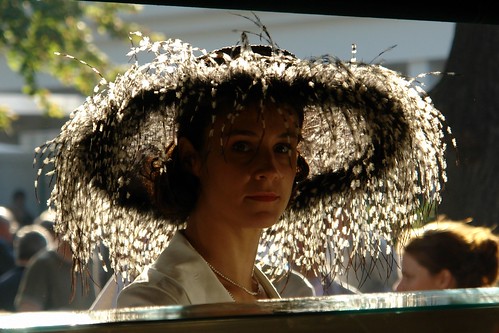 The Most Unique Hat
 Multi Function of Hat
 Purple Wool Hat
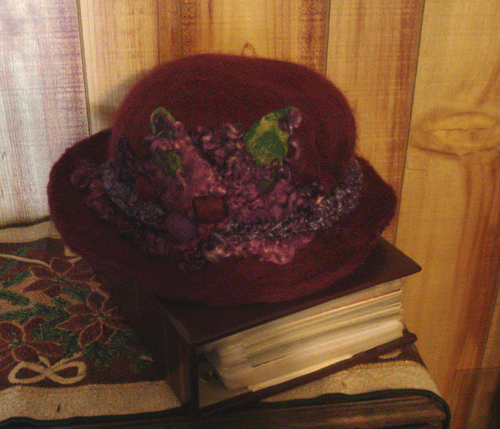 July10 Smith Hat
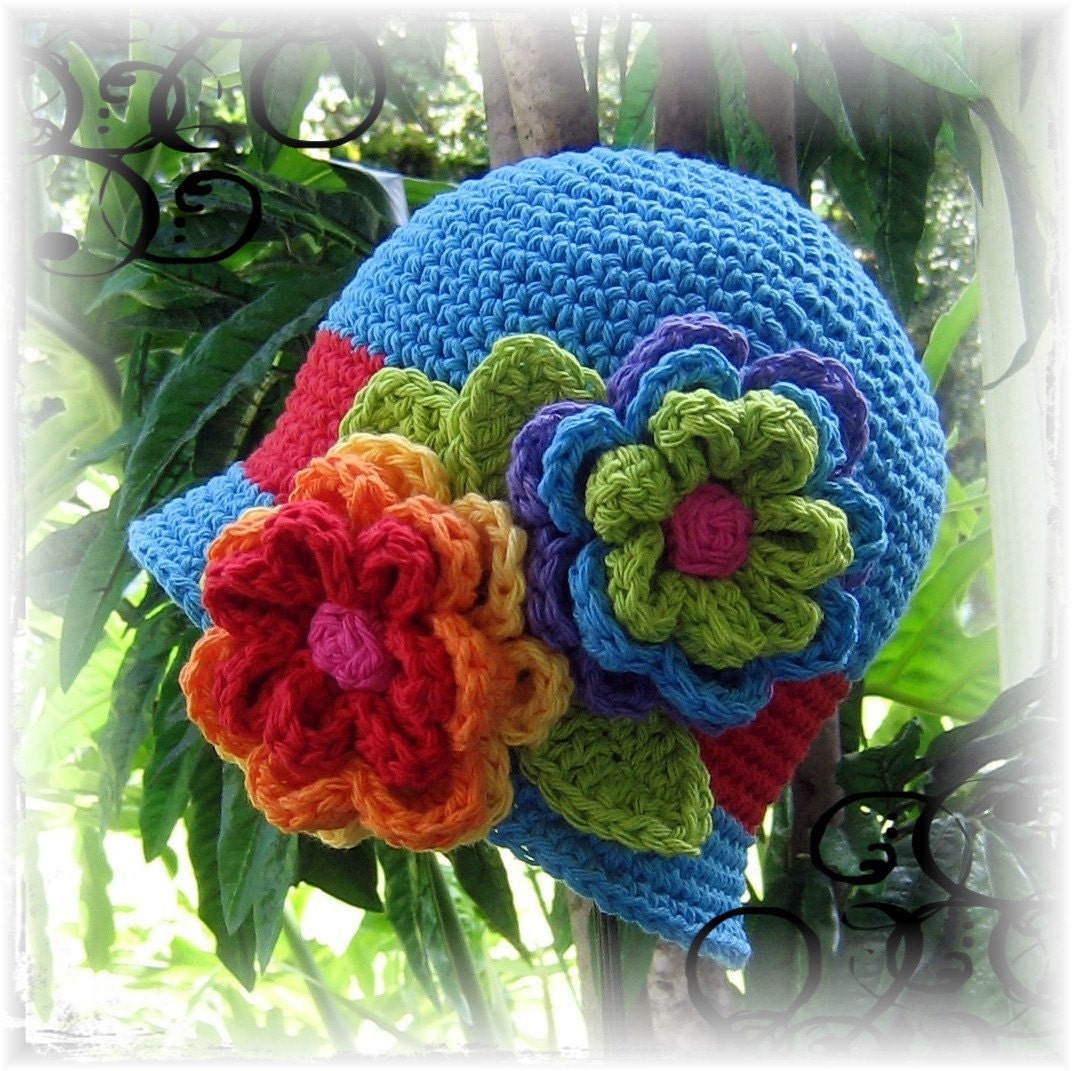 Colorful Hats Flower
 Brown Sinamay Pop Up
 Stock Photo Woman is Posing in a Beautiful Hat
Low taxes, and the erratic collection of them, are common features of life in most of the Middle East. Among the Arab oil producers, for example, taxation accounted for only 5% of gross domestic product in 2002, rising to 17% in the non-oil countries – which is still very low compared with Germany (39%), Italy (41%) and Britain (37%).The higher the taxes, the more accountability and control the people demand. Perhaps we should make our taxation more obvious.
The main reason, of course, is that many of them are rentier economies where the government has sources of income other than taxes. Oil is the classic example but there are others: Egypt benefits in a similar way from the Suez canal and several of the poorer Arab countries receive substantial rent in the form of foreign aid. Overall, slightly less than 20% of Arab governments' revenue comes from taxes.
Taxation is an often-overlooked factor in the internal politics of the Middle East: it helps to explain why undemocratic regimes stay in power for so long. Governments that have substantial non-tax income can buy themselves out of trouble by showering largesse on the population, often keeping prices low through subsidies (as happens in Iran).
Created by British astronomer Scott Manley, the three-minute clip – which is the equivalent of two months per second – starts with a sprinkling of white ‘dust’ around the edge of the planets....The footage shows the discovery of every new asteroid over the past three decades and charts it on an increasingly congested map of the solar system.
Over the years, and as more telescopes are added to the experiment and detection methods improve, this becomes a dense green ‘ring’ as the number of ‘minor planets’ found in the asteroid belt increases. _ImpactLab_from_DailyMail
 Brown Winter Hat
 Argyle Leaf2 pg
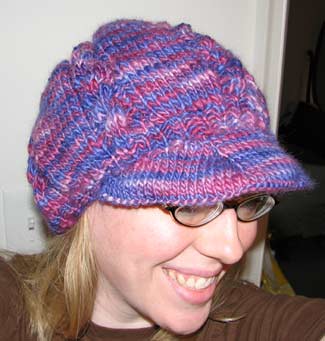 Full Colors Hat
 Womens Winter Hats
 Blue Hat Winter
 Lime Green Hat
 Penguin Hat Winter
 Jodi Reid Felted Wool Hat


